Shed Windows Cut To Size
Replacing a broken shed window does not need to be expensive or complicated. Clear acrylic and polycarbonate sheets provide a lightweight, practical alternative to conventional glass and can be ordered cut to the exact dimensions of your window frame.
For most small, well-supported shed windows, clear acrylic is an affordable and easy-to-install option. Polycarbonate is more suitable where additional impact resistance or security is required. Enter your measurements online to receive an instant price without having to request a quotation or cut the sheet yourself.
Our advice


Choosing the right material
The right material depends on the size of your window, your budget and the level of impact resistance required.
Clear acrylic sheet
Clear acrylic is usually the best option for a standard shed window replacement where cost and appearance are the main priorities. It is lightweight, provides clear visibility, and is easier to handle than glass. Acrylic is naturally UV stable and does not yellow over time, making it a long-lasting choice for outdoor use.
Choose acrylic when:
- You want an affordable replacement for broken shed glass
- The sheet will be supported around all four edges
- The window is not exposed to frequent impacts
- You want a clear, traditional-looking window
Clear polycarbonate sheet
Polycarbonate is more impact resistant than acrylic and is better suited to sheds located near play areas, pathways or exposed locations. It is also a stronger option where security is an important consideration. Clear polycarbonate sheets are highly resistant to heat and UV radiation and do not yellow in the sun, making them ideal for outdoor use.
Choose polycarbonate when:
- The window is at greater risk of impact
- Children regularly play near the shed
- You require additional security
- The window opening is larger or less well supported
What thickness should a replacement shed window be?
The appropriate thickness depends on the size of the window and how well the sheet is supported by the frame.
| Window type | Recommended thickness |
|---|---|
| Small window supported on all four sides | 3mm acrylic |
| Medium-sized window requiring more rigidity | 4mm acrylic |
| Window at risk of impact or forced entry | 3mm or 4mm polycarbonate |
| Large or lightly supported window | 4mm or thicker, depending on the opening |
For most small garden shed windows, 3mm acrylic provides a practical and economical replacement. Larger sheets are more likely to flex, so a thicker material or additional frame support may be required.
Where impact resistance is more important than price, choose polycarbonate rather than increasing the thickness of acrylic alone.
How to measure for a replacement shed window
Accurate measurements are essential when ordering a replacement shed window. Before measuring, identify whether the new sheet will sit inside the existing frame rebate or be fitted over the opening.
If the sheet will sit inside the frame
- Remove the damaged glass or existing panel where it is safe to do so.
- Measure the width of the rebate at the top, middle and bottom.
- Measure the height at the left, centre and right.
- Use the smallest width and height measurements.
- Deduct a small amount to prevent the acrylic from fitting too tightly.
For a typical small shed window, allowing approximately 2–3mm of total clearance across both the width and height will help accommodate slight frame irregularities and material expansion.
If the sheet will cover the opening
Measure the full width and height of the opening, then add enough overlap for the sheet to be securely fixed to the surrounding timber.
The amount of overlap required will depend on the fixing method, but the acrylic should extend far enough beyond the opening for screws, clips or glazing beads to hold it securely.
Before ordering, check that:
- The frame is reasonably square
- The timber is not rotten or severely damaged
- The sheet will not be forced tightly into the rebate
- Your measurements are entered in millimetres
- You have selected the correct thickness and material
Examples of replacement shed windows
Acrylic and polycarbonate can be used to replace damaged glass in garden sheds, summerhouses, workshops and other outdoor buildings.
The examples below show how clear plastic sheets can be fitted into existing timber frames or mounted over a window opening. Acrylic provides a clear and economical finish, while polycarbonate is more suitable where the window may be exposed to impact.
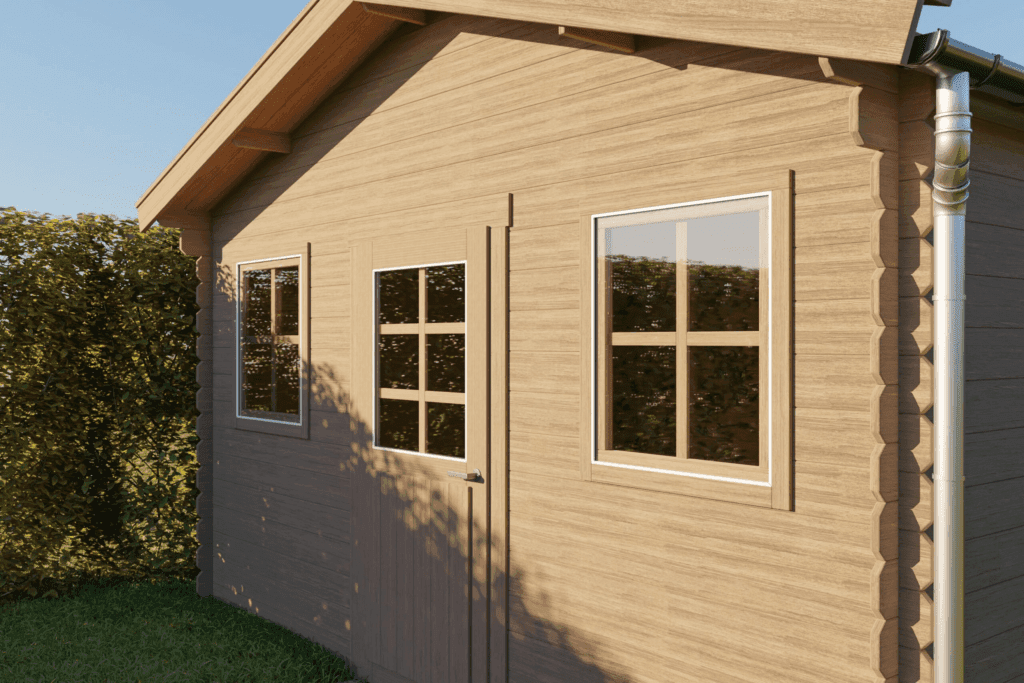
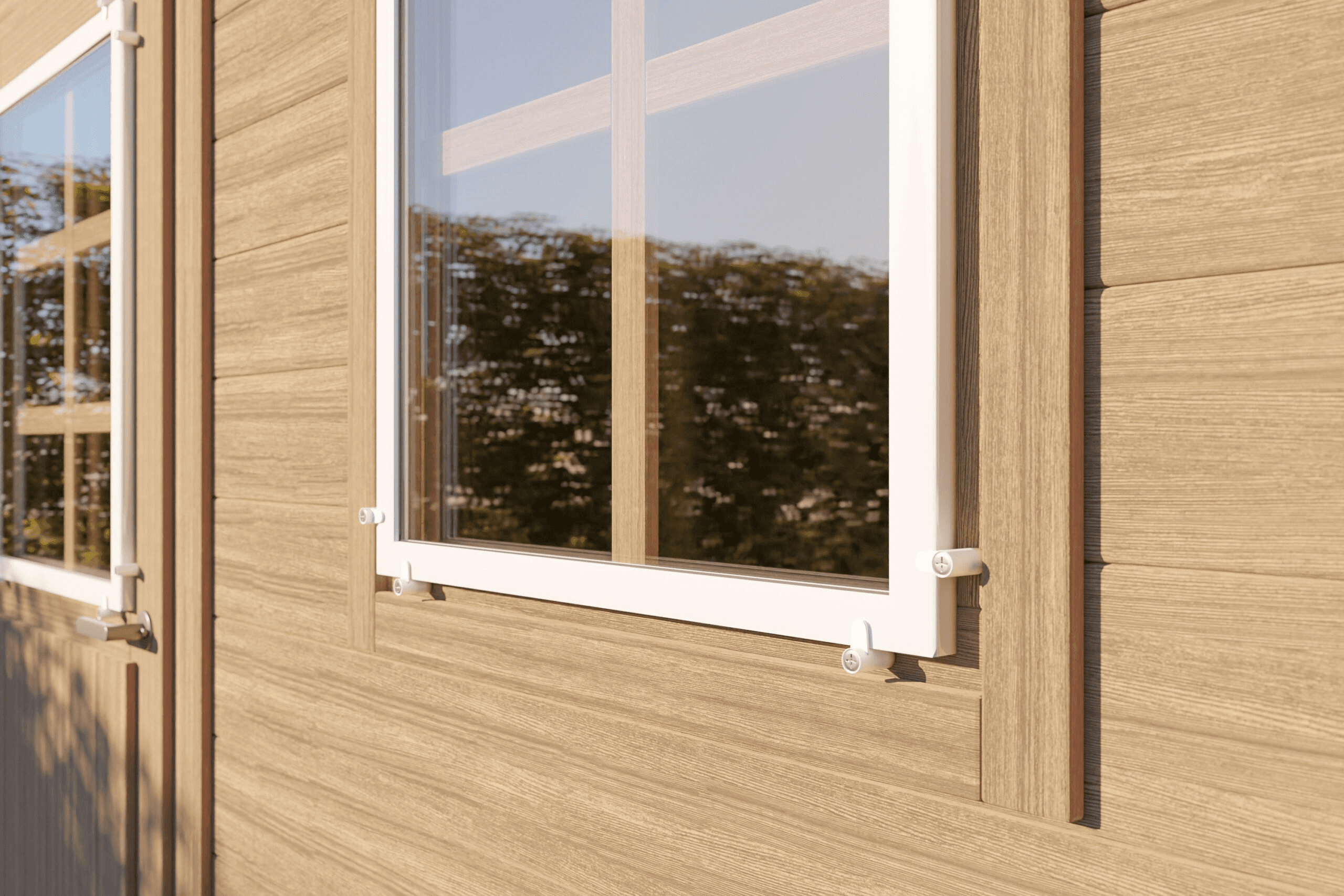
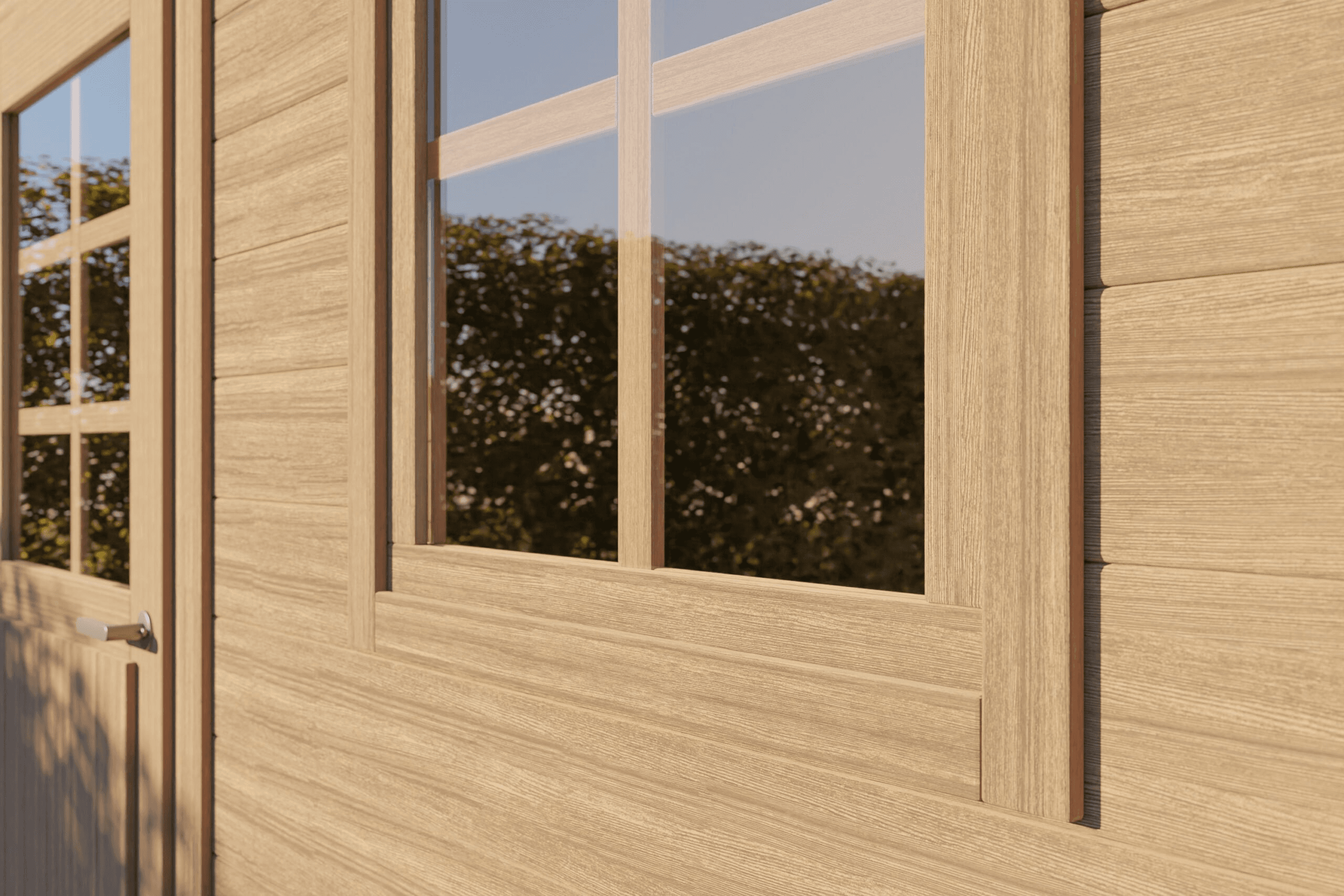
In this step-by-step guide, you will find how best to replace the window of a garden house or shed.
In this step-by-step guide, you will find how best to replace the window of a garden house or shed.
Acrylic, Polycarbonate, or Glass: Which is best for a shed window?
In this table you will find a comparison between acrylic, polycarbonate and glass. Each point has been given a plus, two pluses or a minus. If you look at impact resistance, for example, you will see that polycarbonate scores best, followed by acrylic. Normal glass gets a minus here, as glass is not an impact resistant material.
| Acrylic | Polycarbonate | Glass | |
| Lightweight | good | good | poor |
| Ease of maintenance | good | good | good |
| Ease of assembly | good | good | poor |
| Impact resistant | good | very good | poor |
| Economical | good | good | very good |
| Self-adjustment | very good | good | poor |
| Scratch resistant | poor | poor | very good |
Is acrylic or polycarbonate better for a shed window?
Acrylic is normally the better choice when affordability and appearance are the main considerations. It provides good clarity and is suitable for most small, well-supported shed windows.
Polycarbonate is the better choice where the window may be struck, damaged or targeted during an attempted break-in. It costs more, but provides substantially greater impact resistance.
Ways to fit a plastic shed window
There are several ways to secure an acrylic or polycarbonate sheet to a timber shed.
Fit the sheet inside the existing rebate
This is the most traditional method. The sheet sits inside the existing window frame and is held in place using timber glazing beads, glazing clips or panel pins.
This method provides a neat finish and is suitable where the original frame remains in good condition.
Fit the sheet over the opening
The plastic sheet can also be mounted over the window opening and secured directly to the surrounding timber.
This may be suitable where:
- The original rebate is damaged
- The opening is irregular
- A quick and economical repair is required
The sheet should overlap the opening sufficiently for the fixings to be positioned securely in the surrounding timber.
Fix the sheet with screws
Acrylic and polycarbonate can be fixed using screws and suitable washers. The fixing holes should be 2–3 mm larger than the screw shaft to allow for material movement. Keep a minimum edge distance of approximately 10 mm, or 1.5 to 2 times the screw diameter. Do not overtighten the screws, as this can cause stress around the fixing holes and may lead to cracking.
How to weatherproof a replacement shed window
The replacement sheet must be fitted securely enough to prevent rain from entering around the edges.
Before sealing the window:
- Make sure the frame is clean and dry
- Repair rotten or damaged timber
- Check that the panel sits flat
- Remove loose paint and old sealant
- Confirm that any drainage points remain clear
Use a sealant or glazing product that is suitable for both the plastic sheet and the surrounding frame material.
Apply the sealant evenly around the exposed joints, but avoid using excessive amounts. A large bead of sealant will not compensate for a damaged or uneven frame.
Inspect the window after heavy rain and reseal any areas where water is entering.
Common shed window replacement mistakes
Ordering the sheet to the exact rebate size
Acrylic should not be forced tightly into the frame. Leave a small clearance around the edges to account for uneven timber and material expansion.
Choosing a sheet that is too thin
Thin acrylic may flex or bow in a large opening. Choose a thicker sheet or add additional frame support where required.
Overtightening screws
Screws should secure the window without clamping the material tightly. Excessive pressure can cause cracking around the fixing holes.
Drilling too close to the edge
Fixing holes positioned too close to the edge of the sheet are more likely to crack. Keep a minimum distance of approximately 10 mm, or 1.5 to 2 times the screw diameter, from the edge.
Sealing over damaged timber
Sealant will not provide a long-term repair if the surrounding frame is rotten or unstable. Repair the timber before fitting the new window.
Removing the protective film too early
Keep the protective film in place while measuring, positioning and drilling the sheet. Remove it only after installation is complete.
Order a replacement shed window made to measure
You can order acrylic and polycarbonate sheets cut to the exact dimensions required for your shed window.
Select your preferred material and thickness, enter the width and height in millimetres and view the price immediately. There is no need to request a separate quotation.
Your sheet will be cut to size before dispatch, allowing you to fit it directly into or over the existing window frame.
Before placing your order, check:
- The width and height, including a small margin for clearance and expansion
- Whether the sheet will sit inside or over the frame
- The required material
- The required thickness
- Whether fixing holes or additional processing are needed
Cut-to-size products are manufactured to the measurements supplied, so measurements should be checked carefully before ordering.