

Working with High Pressure Laminate (HPL) offers a multitude of possibilities at Plasticsheetsshop. HPL is a top-tier plastic, perfect for various projects like furniture and cladding. The strength and workability of HPL demand the right techniques for an impeccable finish. In this piece, we’ll share with you how to process HPL, to ensure the very best results for your projects. Discover practical tips, techniques, and essential tools below.
Drilling
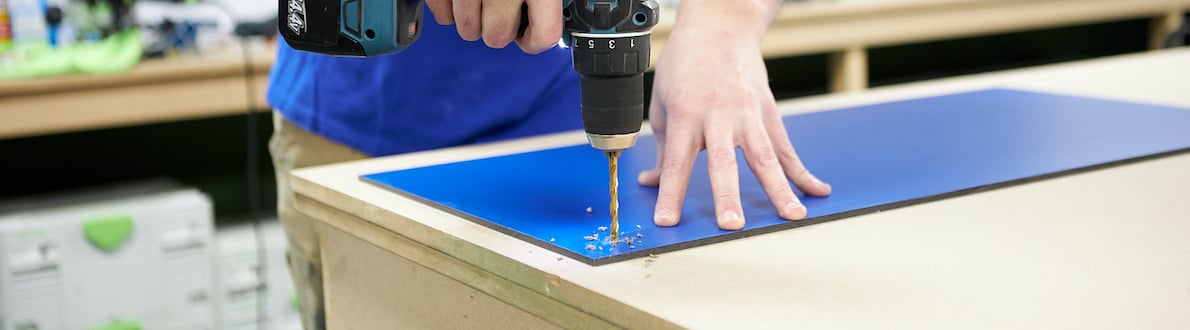
Use either an HPL drill bit or a wood drill bit. It’s essential to drill a hole that’s at least 2 to 3 mm larger than the screw’s diameter. Begin drilling from the visible side for the cleanest result. Maintain a distance of at least twice the panel’s thickness from the edge. Mark the drill holes with masking tape, and make sure there is a maximum spacing of 450 mm for screw stability. For broader panels, we recommend mounting points in the centre.
Milling
Choose a HSS milling cutter for clean and precise cuts. Make sure the HPL sheet is securely clamped and use a run-out plate for a smooth finish. Prevent damage during clamping with wooden slats and keep the sheet in top condition.
Engraving
Want to create colour variations with engravings? Engrave at least 1 mm deep. A handheld or CNC milling machine offers the best results. This method adds unique patterns or text to your HPL projects, giving them a personal touch.
Gluing
Always ensure ventilation space behind the HPL sheet to prevent warping from moisture build-up. Apply glue on materials like wood or metal. Use a primer for optimal adhesion. This way, you’re certain the HPL stays firmly in place.
Painting
Want to paint HPL? Choose alkyd paint for outdoor projects and acrylic paint for indoor ones. Start with a multi primer or plastic primer for a solid base. For exterior work, a terpentine-based undercoat is best, since it offers better weather resistance.
Sawing (circular saw)
Use a circular saw for straight, long saw cuts. Opt for a saw blade with fine teeth to minimise splinters. Clamp the HPL sheet securely and use a run-out plate to reduce splintering.
Sawing (jigsaw)
For complex shapes and fine work, a jigsaw is excellent. Always work from the visible side to limit damage. This technique allows you to saw intricate shapes effortlessly.
Letter Cutting
For letters on your HPL, have them milled out with our handy sheet calculator. Secure the letters with screws or glue, depending on your preference and project requirements. This allows your creativity to flow and results in a professional finish.